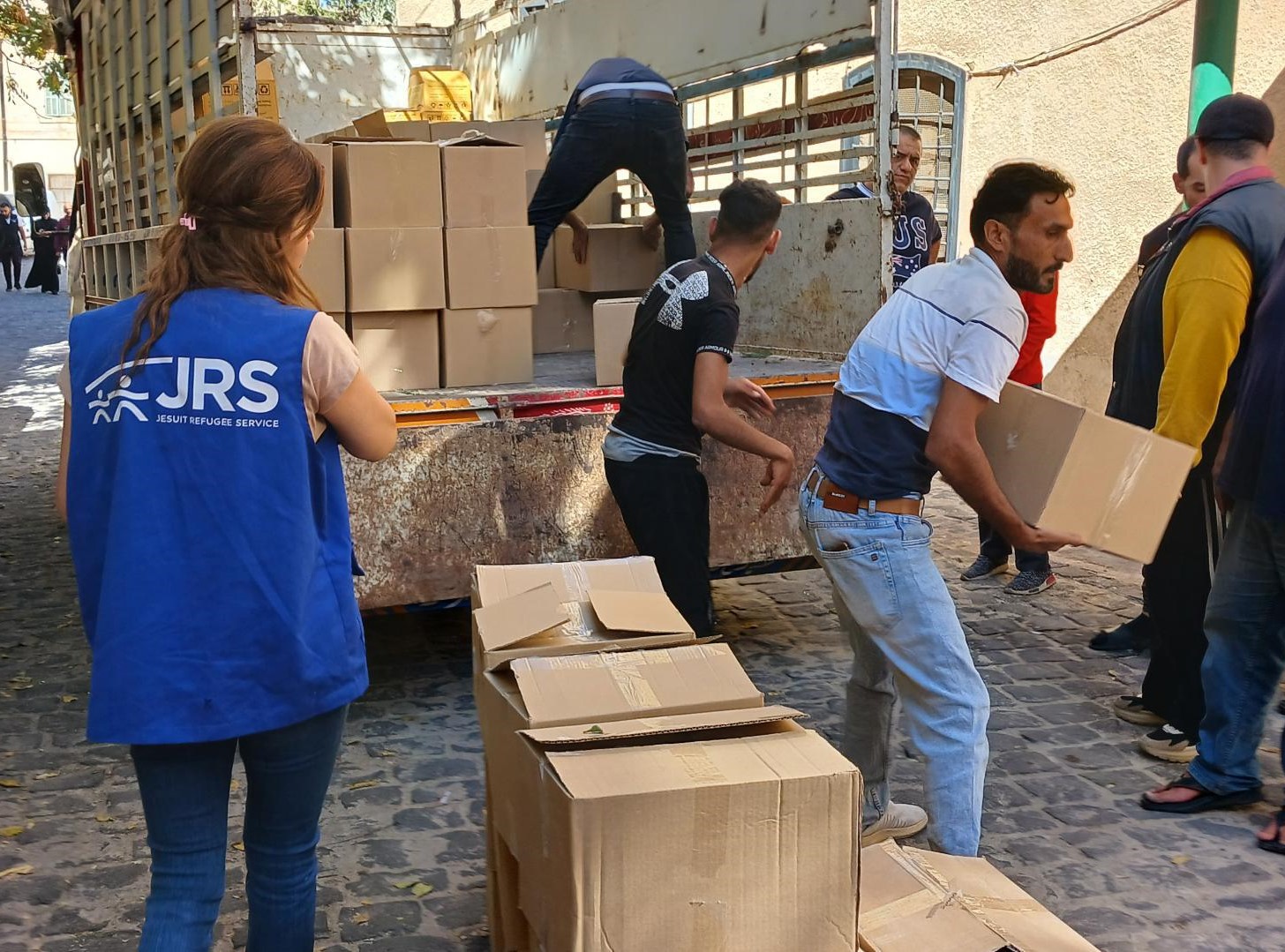
![]() (Mae Hong Son, Thailand) – When I was a novice in Scotland many years ago, our novice master faced the challenges of directing young men in the Jesuit way of life, but at a time when the world and the Church were going through profound changes. The end of the 1960s brought the Paris revolution of the young, and the Church was still grappling with the implications of its engagement with the world after Vatican II. In our little retreat he passed on the values that had kept him and his contemporaries fairly sheltered from such turbulence. His advice about how to "exit" after giving retreats, for example, was based on the premise not even to send a greetings postcard to a retreatant. Though this was his public advice, thankfully for his own sanity he didn’t subscribe to the practice himself. Had he been alive a decade later he would have been entirely happy with the idea of accompaniment as part of a Jesuit work – that of JRS’ triple mission of accompaniment, service and advocacy on behalf of the forcibly displaced, and happy with the notion that such accompaniment could be long-term, constant and mutually fulfilling. When JRS started there were about five million refugees – later we recognized and counted other groups of dispossessed people not categorized in 1980: for example, 26 million IDPs and some 12 million stateless persons. However JRS never lost the sense that it is a small organization whose mission is not to be involved in massive humanitarian interventions but rather to offer a different, personalist service that has its foundation in the experience of Ignatius and the early companions – a service of accompaniment of those who are displaced. by Fr. Joe Hampson, S.J. |
- Foundation of JRS
- Characteristics - 1
- Characteristics - 2
- Characteristics - 3
- Characteristics - 3 continued
- Whom do we accompany
- Conclusion and Footnotes
|
Accompaniment as foundation of JRS work The etymology of accompaniment is that of breaking bread with someone, and so it is built on the twin ideas of hospitality and sharing a meal. The biblical roots clearly demonstrate this twin foundation as a religious duty. The story of Job declaring that every sojourner will not pass the night without shelter (Job 31:32), I was a stranger and you took me in, says the Jesus of Matthew 25, and Lydia’s insistence in offering hospitality to Paul’s companions when they came to Philippi to establish the first Christian community in Europe – "she would have no opposition" (Acts 16:15) – all point to the centrality of the New Testament law, to love one another as I have loved you, not contradicting but building upon the Deutoronomical injunction to love the stranger (Dt 10:19). Offering hospitality to strangers is not always a natural instinct, if we reflect on the current hysterical outbursts from politicians and opportunists who rail against the threat from outside, the danger from overseas, problem of the stranger-in-our-midst, the security risk from the foreigner, the menace of the Muslim, the spread of the terrorist. Modern discourse even at times seems to contradict the very value of spontaneous and natural offering of hospitality and accompaniment, arguing that modernity and security both require these values to be overlooked in favor of protectionism and isolationism. Accompaniment then is quite topical, and it is one of the central ideas of JRS: it is both a dimension of all the work undertaken, as well as a specific sectoral activity. "JRS is an international Catholic organization whose mission is to accompany, serve and defend the rights of refugees and forcibly displaced people." [JRS Charter, #9]. Interestingly, the Charter document was not finalized until some twenty years after its foundation, whereas most organizations have their charter document as the basis of their initial foundation. JRS preferred to use an Ignatian methodology of see-judge-act in the beginning, by building on experience that is reflected upon, keeping the structures light, and preferring to "facilitate the involvement of individuals and communities" first, thereafter "promoting regional and global cooperation and networking on behalf of refugees”, and only thirdly and lastly to "undertake services at national and regional levels with the support of an international office in Rome" [Charter, #9] Even these services provided by JRS to refugees are concentrated locally, with the headquarters merely taking on a support role. Colleagues from other NGOs were always amazed when I described JRS structure, for it seemed to them strange that a Jesuit organization could be so decentralized in the matter of, say, finance. Almost all international NGOs would have much more centralized systems of finance, fundraising and accounting. As well as the distinctive feature of decentralization, a key feature of JRS that marks it out from other humanitarian NGOs is the focus on accompaniment. Accompaniment has three overlapping and mutually reinforcing aspects: 1) it is the critical intersect between faith and humanitarian action, 2) it is an expression of essential attitudes within JRS, and 3) it makes unique structural and programmatic demands on the work undertaken by JRS. |
|
The religious-humanitarian intersect • Accompaniment as companion on a journey All the great religions enjoin on their followers the responsibility of showing compassion to those who suffer. Yahweh of the Old Testament required of those who would walk humbly with their God, that they do justice and love kindness (Micah 6:8). The accompaniment of refugees can be a powerful exercise of this virtue of kindness or compassion, showing that religious responsibility is not merely seeing the stranger lying by the side of the road, but with the Samaritan “when he saw him he had compassion” (Lk 10:33). Buddhism is known as the religion of wisdom and compassion. |
|
Attitudes • Accompaniment as listening |
|
Structural and programmatic implications • Accompaniment as capacity-building In refugee camps or IDP settlements throughout the world there are often great differences in ethos: whereas some suffer from a permanent malaise and passivity, sometimes exacerbated through severe shortages in basic rations and services, violence and ethnic rivalry, others can be a remarkable source of collective action, leadership and organization. One researcher told me that some 200 community based organizations had been found in nine Karen refugee camps along the Thai—Burma border. My own experience has shown how there can be tremendous resilience among groups and individuals whose lives have been shattered by flight from war or persecution. It is that spirit that JRS seeks to capture and nourish when it accompanies IDPs and refugees in their journey in a camp or in urban anonymity. Empowering refugees is to give them back dignity, self-worth and hope for the future. Involving refugees in the plans people make for their lives is not only sensible but a psychological and moral necessity. |
|
Structural and programmatic implications • Accompaniment as predictable and reliable support Refugees are usually placed in camps far from the centers or capitals of the host countries. Such camps are isolated, on the frontiers of society both literally and metaphorically, out of sight and out of mind. Sometimes these ‘invisible’ refugees or IDPs can live in the urban centers of the world, but unseen, unrecognized and unwanted by officialdom. By the physical act of accompaniment, of personal presence, JRS affirms that the companionship and welcome, and brings the frontier into other people’s homes and lives. Accompaniment gives JRS’ role of advocacy a powerful and authoritative voice in a world of competing self-interests. |
|
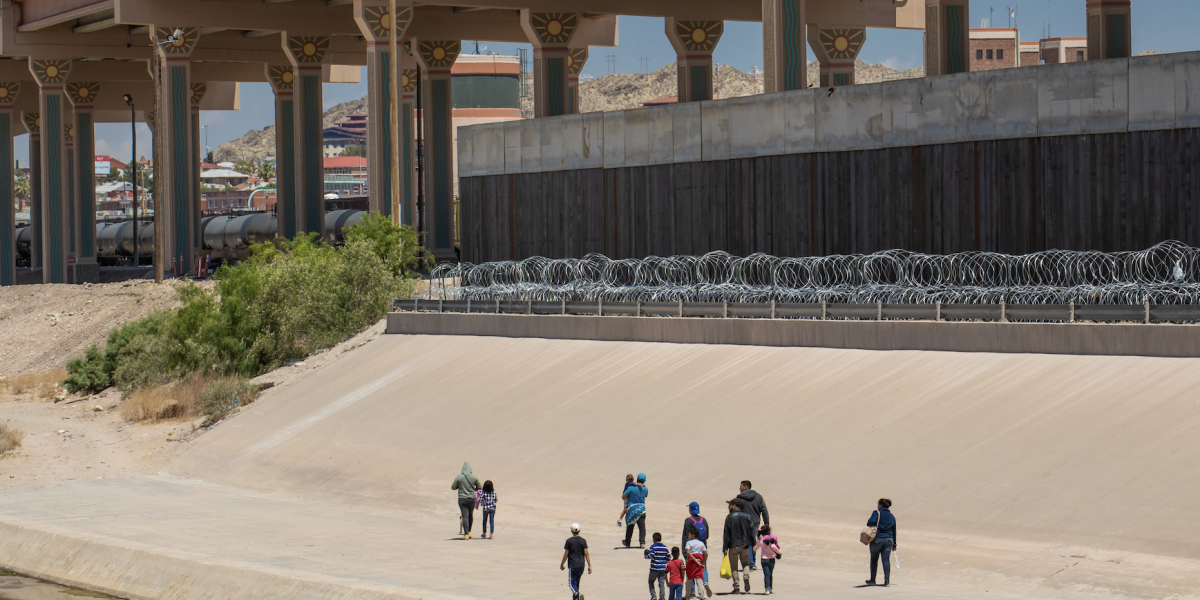
Whom do we accompany? The JRS Charter spells out to whom the organization has a mission. We have already seen that #9 of the Charter speaks of the triple mandate of accompaniment, service and advocacy as applying to “refugees and forcibly displaced people”. However JRS follows Catholic social thought in applying the word to those who experience the trauma of forcible displacement, even for the five reasons outlined in the Geneva Convention, but who do not cross an international border, and therefore whose right to international protection under the convention cannot be claimed. The Church speaks of such forcibly displaced as de facto refugees, even though they cannot benefit from a dedicated treaty and institution designed for their protection. Commonly referred to as IDPs (Internally Displaced Persons), the international community and the UN system has been struggling with how to address one of the most serious and distressing phenomena of the last decades, particularly acute in Africa. Though there is no international legal instrument, Francis Deng’s Guiding Principles on Internal Displacement (1998) gives a normative framework for governments and agencies to respond to the needs of IDPs with thirty principles on protection, humanitarian assistance and resettlement. These principles have become widely disseminated, and have become a guide for humanitarian action and even a standard for measuring the effectiveness of such action. JRS usually finds itself working with both refugees and IDPs in a particular country. Although it is a truly international agency present in over 50 countries, a very strong presence is found in Africa, and much of the institutional fund-raising, support and advocacy work is focused on the continent. Africa, with 12% of the world’s population, hosts nearly one-third of the world’s refugees, and half of the world’s 25 million IDPs. Of the ten top refugee-producing countries, half are in Africa, and three of the top ten hosting countries (Tanzania, Chad, and Uganda). Of the twenty countries in the world with the highest ratio of refugees, eight are in Africa, and nine out of the 24 top countries in the world with the highest ratio of IDPs in their population are in Africa6. These figures show that it is appropriate for JRS to focus much of its work and service in the continent. This African focus also corresponds to a disturbing trend of growing forced displacement on the continent. Jeff Crisp writes that “the precise reason for the rising number of IDPs in Africa, as well as its relation to the decline in the size of the continent’s refugee population, remains unexplored and to a large extent unexplained”7. He adds that such growth has put great pressure on both the principle and the practice of asylum, the cornerstone of international protection for refugees. Asking the question whom we accompany in JRS is another way of asking whom we do not serve. Because of the strong humanitarian and religious motivation of our staff, because our mandate is wide, because we offer many types of service, it can be hard to say that we are limited in our help. Nevertheless internal struggles in JRS over the past decades tend to show the wisdom of applying limits and boundaries to our work. JRS decided to make an option for refugees and forcibly displaced in most of the regions where we work, but we felt that migrant work per se was too broad a category for us to identify with. In other words, we work with forcibly displaced, even those displaced at times by natural disasters, but do not normally work with migrants, those who are workers moving away from their families in search of employment. Yet we are acutely aware of the increasing ‘gray’ area between migration and refugees. The forced nature of some flight (for example, Zimbabweans fleeing the situation in that country, or Burmese so-called economic migrants in neighboring Malaysia and Thailand) make it very hard, even artificial to hold onto the distinction between flight induced through persecution, or any of the five grounds for consideration as refugee, and the flight of an “economic” migrant who has no other choice to provide for his family after persistent exploitative abuse than to go elsewhere. When people feel forced to move to find alternative livelihoods, the governments of their home countries at best ignore the situation, at worst promote the move in the hope of remittances, whilst the receiving countries routinely criminalize such migrants, or consign them to a twilight world where they are neither seen nor heard. For example, Thai provincial regulations for migrant workers from Burma and Laos include a prohibition from driving motor bikes, using cellphones, gathering together in groups larger than five, and being outside their designated quarters after 8pm. Refugees and asylum seekers often travel to other countries in the company of others who have different, non-protection needs. Quite often they can literally be in the same boat as undocumented migrants, trafficked by criminal middle-men, their journeys marked by inhumane conditions, and exposed to exploitation and abuse. Governments can react badly to these arrivals, treating them all as security threats. UNHCR has tried to address this situation of what is called mixed migration through a plan of action that calls for, amongst other actions, greater sensitivity of how potential refugees are handled, dealing with different cases in differentiated ways, and reinforcing the principle of non-refoulement, or preventing forced return of refugees9. |
|
Conclusion One of the most striking examples of accompaniment in daily life has been my experience in almost every part of sub-Saharan Africa, where it is considered normal that a visitor leaving an office or homestead be accompanied for some part of the return journey. After becoming accustomed to such habits, it always strikes me that normal “European” etiquette for bidding farewell to a visitor is rather cold and impolite. In many Bantu languages there is even a word for such type of accompaniment of a visitor at the end their visit – for example, in Shona kuperekedza. It is with such sensitivity that I think JRS has approached the accompaniment of refugees in their life of displacement and exile. To conclude with a definition that might sum up what we have said in this article: JRS accompaniment is the purposeful and open presence to individuals or communities, through a response deriving from religious and humanitarian concerns, and which has special implications for service and advocacy work. Notes 1 Example from Tom Keating and A Knight, Building Sustainable Peace, UNU, Tokyo 2004 2 Refugees: a Challenge to Solidarity, Cor Unum, Rome, 1992, #37 5 “The humanitarian system currently lacks the skills and capacity to successfully measure or analyse impact” says a 2004 ODI [Overseas Development Institute] HPG report (Measuring the Impact of Humanitarian Aid by Charles-Antoine Hormann, Les Roberts, Jeremy Shoham and Paul Harvey, London, 2004, p 5). 6 No refuge: the Challenge of Internal Displacement, by Kathleen Newland et al, OCHA, Geneva, 2003. 7 Jeff Crisp, African Displacement, UNHCR, Geneva, 2006. 8 In Abuse, Poverty and Migration, published by the Karen Human Rights Group, 2009, it is argued that the concept of livelihood refugee is a more comprehensive term that covers the situation of forced migration from Burma and IDPs within Burma (p 54). 9 Refugee Protection and Mixed Migration: A 10-Point Plan of Action, UNHCR, Geneva, 2007 |