JRS INSIDER | After Surviving the Earthquakes, He Returned to Help
10 August 2026|Chloe Gunther
This story first appeared in JRS INSIDER, a monthly newsletter including stories of impact across JRS global.
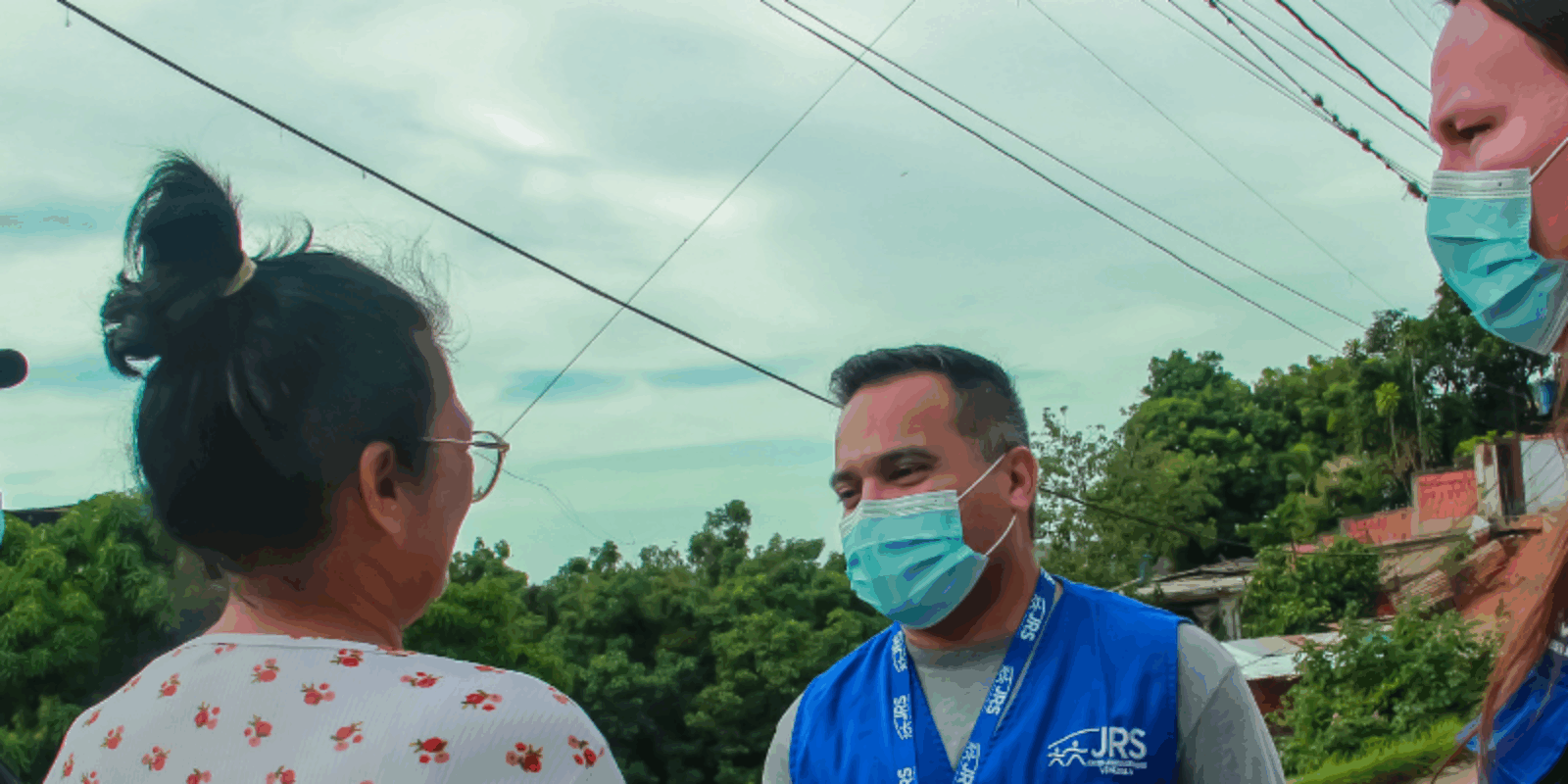
Alex is a teacher and JRS volunteer in Venezuela. He called me from a Jesuit school in Caracas that had been transformed into an emergency supply distribution center following the devastating earthquakes that struck the country on June 24.
At around 6 p.m. that evening, Alex was home with his wife, Kimberly, and sister-in-law. The three were discussing and preparing for the arrival of Alex and Kimberly’s baby girl, due in the fall.
Alex’s sister-in-law suddenly looked down, confused by an unfamiliar alert on her phone. Just as the three of them realized the alert was warning them of an earthquake, the ground began to shake. With each second, the tremors grew more intense. They knew they needed to get out of the building.
Then water began flooding in. The door to their apartment jammed; the structure of the building was already compromised. Alex spent what felt like an eternity trying to get the door open.
Outside, they gathered with neighbors and watched in horror as a man on the third floor prepared to jump from his window, afraid the building would collapse. His wife managed to pull him back inside, and the two evacuated safely.
For three days, no one wanted to return. Surrounded by rubble, they slept in a garden in front of the apartment. Eventually, engineers arrived to inspect the structure and gave them the all-clear to return.
“That was such a relief,” Alex said. “So many buildings around us, even those just a kilometer away, had collapsed. Those people lost everything.”
For Alex and his wife, however, the damage extended beyond what could be seen.
His wife struggled to sleep. Her fear was so overwhelming that she began making plans for the two of them to raise their newborn outside of Venezuela.
Alex, who studied psychology in university, drew on his training to support his wife and those around him.
It was a role that felt familiar. Alex was a Jesuit for 15 years before deciding to leave the priesthood and start a family. He first encountered JRS while in formation. During that time, he studied alongside two priests who are now leaders at JRS, including Fr. Edgar Magallanes, S.J., country director of JRS Venezuela, and taught with Fe y Alegría in Latin America. Alex is deeply familiar with the Ignatian principles of accompaniment, of walking alongside people in their suffering and uncertainty.
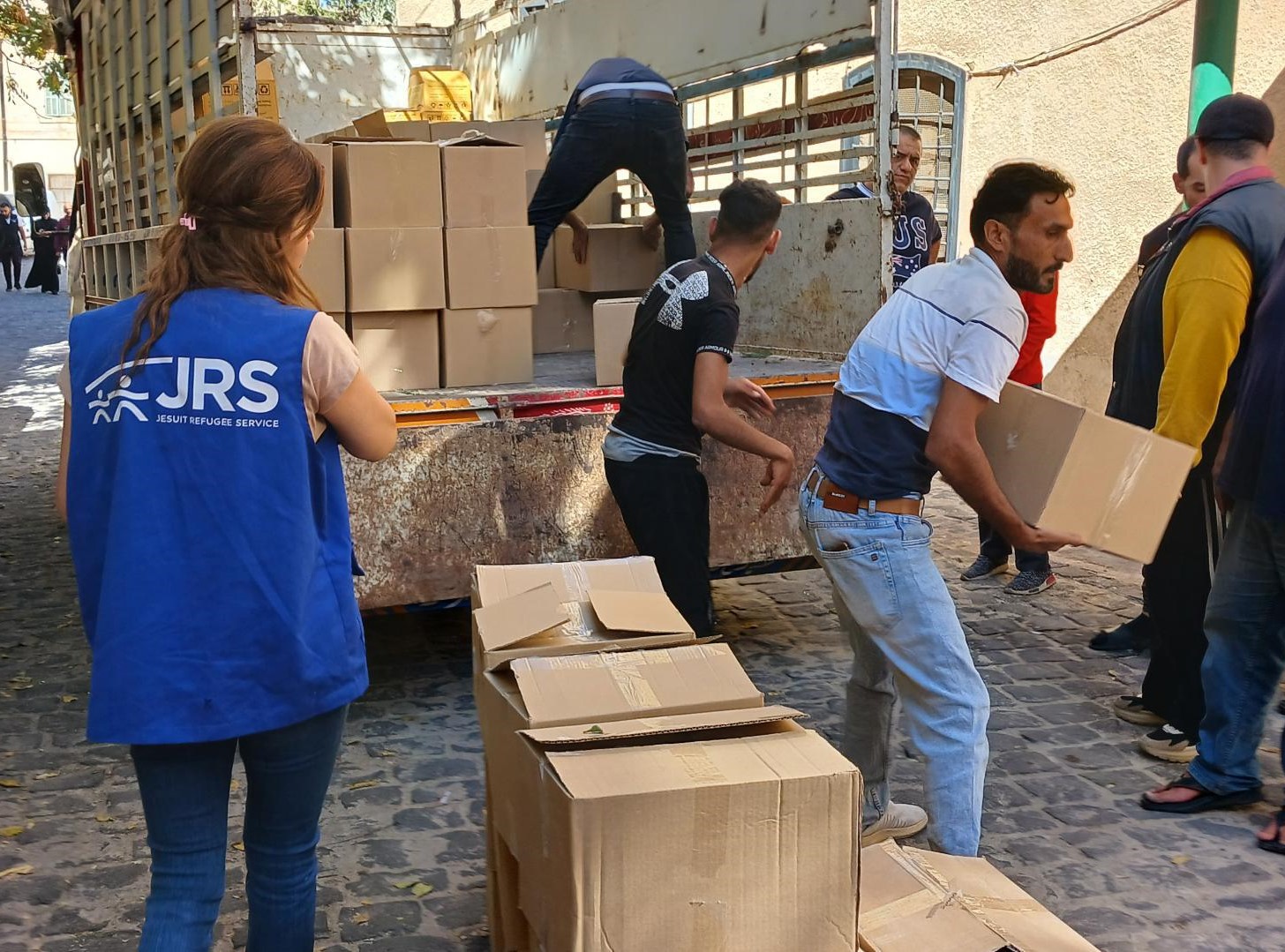
In the weeks following the earthquake, Alex has returned to disaster zones with JRS. He provides psychological first aid to people he encounters and helps at the emergency distribution center, ensuring members of the community receive the assistance they need. That also includes providing mental health support to those working at the center.
Alex’s wife has begun to recover. She has settled back into their apartment. A humanitarian worker herself, she began speaking with a psychologist through her organization.
But Alex eventually realized that he, too, needed support.
At first, he thought he was coping well. He was taking care of his family and showing up for his community. Then one morning, his wife asked him, “Are you starting to dream a lot?”
She said that Alex had been shaking in his sleep, his body reliving the earthquake on some subconscious level.
“In my conscious way, I think I am good… I have no problems and I am going to take care of everything. But my body and my mind are still afraid.”
He thanked his wife for telling him. Since then, he has been working with a psychologist as he continues to encounter the heartbreak of the earthquakes each day.
“They are still recovering a lot of bodies from the rubble,” he said.
Thousands of people have lost their homes. They are sleeping on the streets, in shelters, and with family members when possible.
The scale of the devastation has made one thing clear to Alex: the immediate emergency is only the beginning.
He described JRS as an organization that is especially equipped to accompany people through the “later” part of the crisis. When the immediate emergency has passed and the long work of rebuilding begins, JRS will be there alongside communities.
That work will include helping children return to school and supporting parents as they navigate finding new homes. It will mean leveraging JRS’s global expertise in mental health and psychosocial support, providing space for people to process their experiences, and supporting them as they determine how to move forward.
Alex told me about a young man named Marco, whom he met in a disaster zone. Marco and his three children had survived the collapse of a building, and Marco had pulled his nephew from the rubble.
What he told Alex next has stayed with him.
“We don’t know how to live. From this point forward, I need to be different.”
“That is what hope means,” Alex said. “New beginning, God giving us another chance to learn how to live.”
By the end of their conversation, the two men shared a laugh amid the heartbreak. Before they parted ways, Marco asked Alex to send him the contact information for a psychologist who could help his family.
For Alex, that moment captured both the devastation facing Venezuela and the work that lies ahead.
“The emergency of the earthquakes themselves was the starting point,” Alex explained. “What comes next is the real work of rebuilding, which will take years.”
Explore more