Indonesia
Refugees in Indonesia: How Jesuit Refugee Service Responds
Indonesia is home to more than 12,000 refugees and asylum seekers, many of whom face barriers to education, health care, and stable livelihoods. Jesuit Refugee Service (JRS) accompanies refugees across the country through education, mental health support, emergency assistance, and advocacy.
Support Refugees in Indonesia
View Full Country Report
Explore JRS Asia Pacific
Quick Facts
- More than 12,000 refugees and asylum seekers in Indonesia
- More than 1,750 individuals served in the last year
- Refugees from Afghanistan, Somalia, Sudan, Myanmar, Yemen, Iraq, and Iran
- Emergency response to Rohingya refugees in Aceh within 72 hours
Our Work in Indonesia
Indonesia serves as a critical host and transit country for refugees fleeing conflict, persecution, and instability. Many refugees in Indonesia come from Afghanistan, while others have arrived from countries including Myanmar, Somalia, Sudan, Yemen, Iraq, and Iran.
Although Indonesia has domestic legal frameworks intended to respect refugee rights, it is not a party to the 1951 Refugee Convention. As a result, many refugees face long-term uncertainty and continue to encounter barriers to education, health care, and meaningful inclusion in society.
How JRS Responds in Indonesia
JRS Indonesia accompanies refugees and asylum seekers through programs centered on dignity, protection, and long-term support.
Core Programs
- Basic needs and financial support
- Mental Health and Psychosocial Support (MHPSS)
- Education and training
- Advocacy
Key Projects
Walking with Asylum Seekers and Refugees
In Greater Jakarta, JRS supports refugees and asylum seekers through basic needs assistance, mental health and psychosocial support, education, training, and advocacy.
Protecting Refugees in Asia (PRiA)
In Aceh, JRS runs a protection program for Rohingya refugees with a focus on advocacy and emergency response.
Today’s Challenges
1. Recognition of refugee rights
Refugees in Indonesia face an uncertain future because there is no legal pathway for them to obtain citizenship.
2. Project funding gaps
Funding cuts threaten JRS programs that help reduce stress, expand educational access, and strengthen support for asylum seekers and refugees.
3. Services for refugee youth
There is significant unmet demand for more certified training and educational opportunities for refugee youth, especially programs that support future livelihoods and resilience.
Critical Needs
Many refugees in Indonesia are struggling to meet their basic needs. Funding cuts from the Office of the United Nations High Commissioner for Refugees (UNHCR) have increased the risk of homelessness for some refugee families, while support for refugee children to attend public school has also declined.
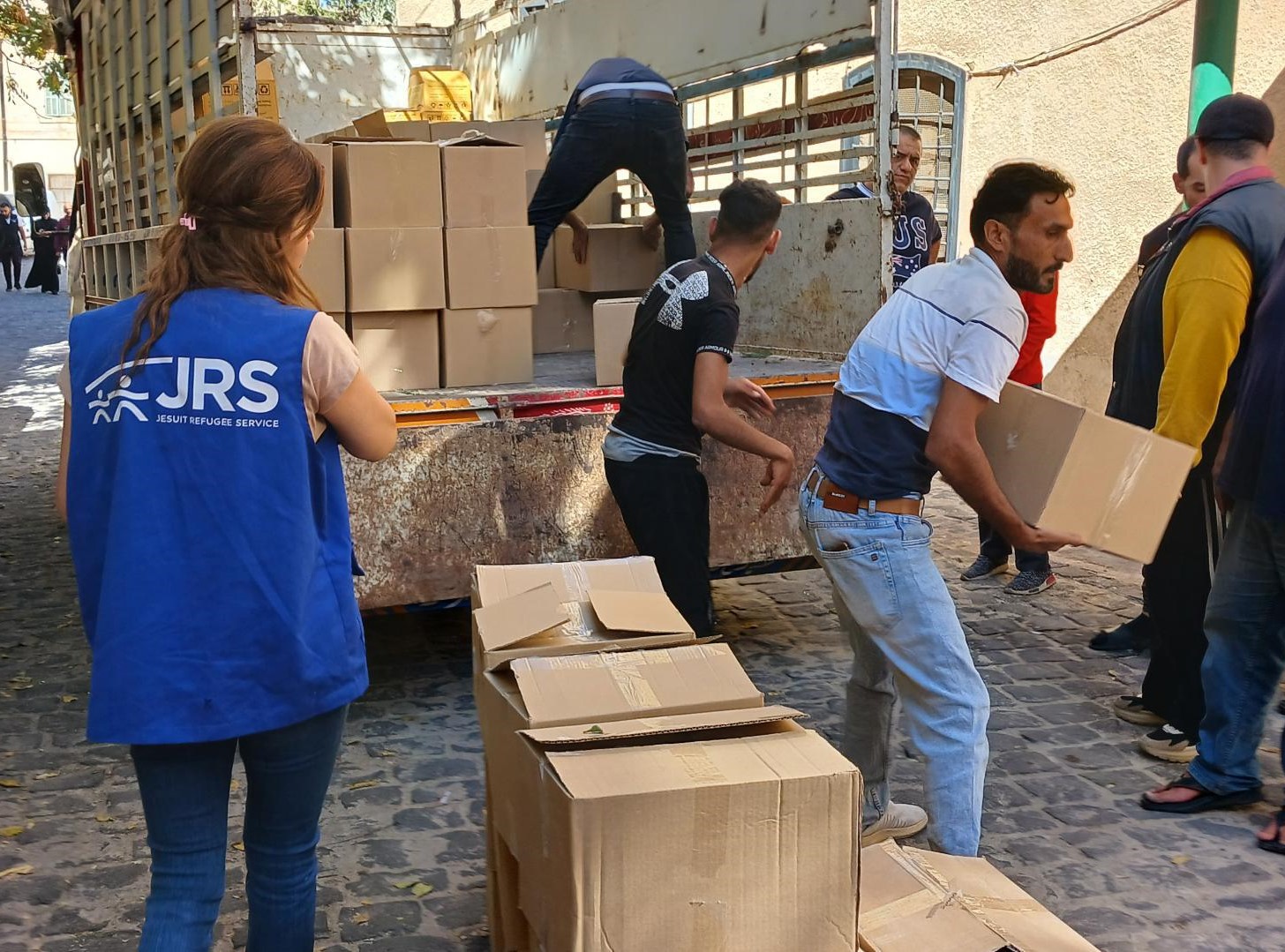
At the same time, rising prices have made it even more difficult for refugee individuals and families to afford food and other essentials. In response to direct requests from refugee communities, JRS Indonesia has launched an open donation campaign to help refugees cover basic living expenses, even if only temporarily.
Refugee-Led Impact
JRS believes that the best responses to refugee challenges are shaped in partnership with refugees themselves.
- As of June 2025, 72 asylum seekers and refugees were actively contributing to community-based initiatives in Cisarua
- These individuals serve as teachers or facilitators in 10 refugee-led organizations and initiatives
- JRS supports these efforts through training, mentorship, tools, and learning materials
Localizing Aid
Before launching its Walking with Asylum Seekers and Refugees project in Greater Jakarta, JRS Indonesia conducted a needs assessment that included interviews with refugee communities and other stakeholders. The findings helped shape the project approach and confirmed the importance of continued support for vulnerable refugees.
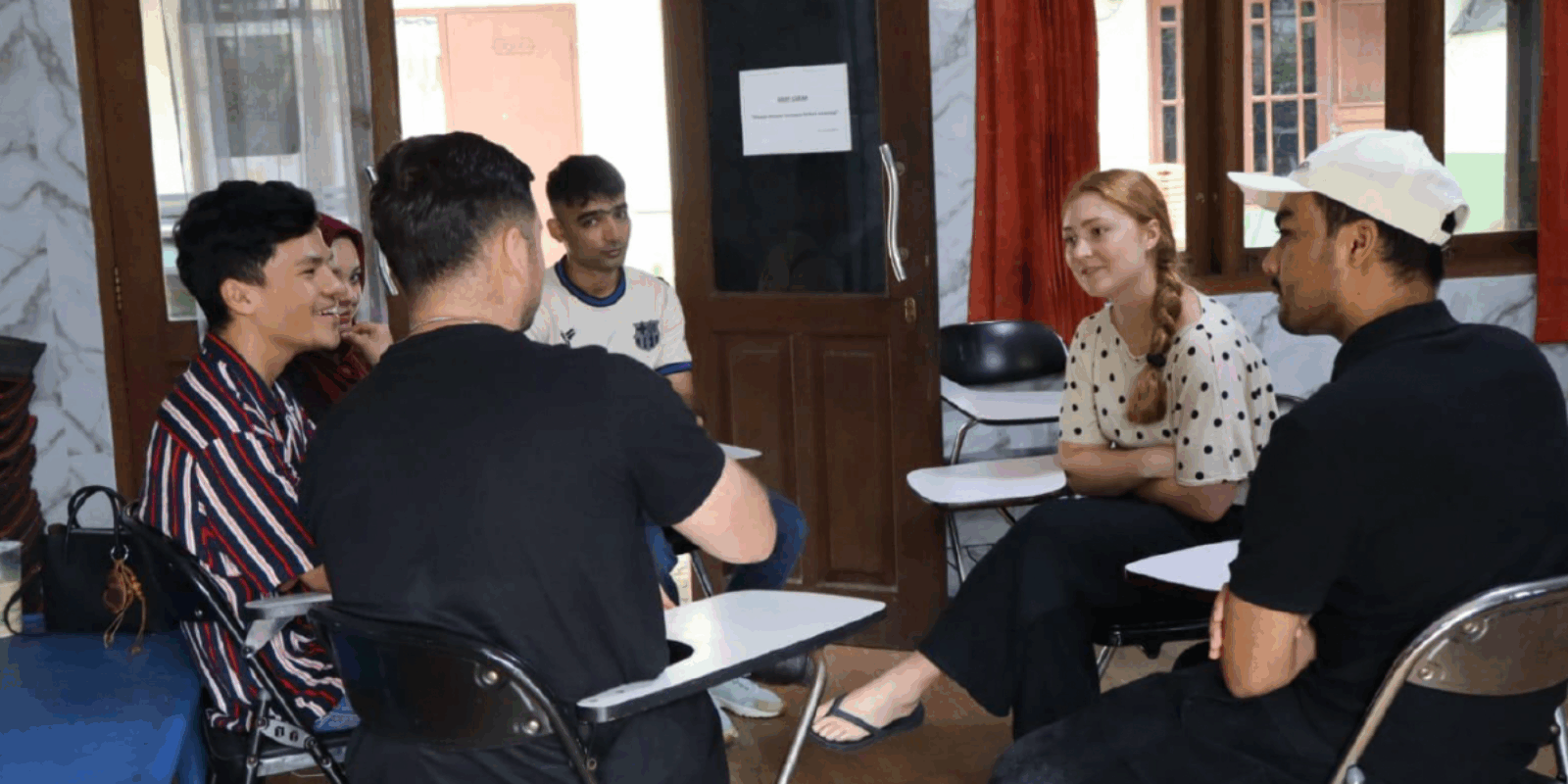
The assessment also highlighted a strong demand among young refugees for certified training and education. In response, JRS Indonesia began a collaboration with Jesuit Worldwide Learning to provide a certified English program for refugees.
Impact of Limited Funding
Although JRS Indonesia does not receive direct funding from the U.S. government, changes in global funding priorities can still affect operations indirectly. Reduced support has serious consequences for refugees who are already living on the edge.
- Refugees may lose access to food, shelter, and health care
- Women, children, and individuals without other safety nets are especially vulnerable
- Reduced funding places greater strain on education, mental health support, and refugee-led community programs
Frequently Asked Questions
How does JRS help refugees in Indonesia?
JRS helps refugees in Indonesia through basic needs assistance, mental health and psychosocial support, education and training, advocacy, and emergency response.
Why are refugees in Indonesia vulnerable?
Many refugees in Indonesia face legal uncertainty and barriers to education, health care, and stable livelihoods. Funding shortages have also made it harder for many families to meet basic needs.
Who does JRS serve in Indonesia?
JRS serves refugees and asylum seekers from countries including Afghanistan, Somalia, Sudan, Myanmar, Yemen, Iraq, and Iran.
Stories
Contact