JRS Advocacy Day 2026: A Nationwide Call for Protection and Accountability
29 April 2026|Chloe Gunther
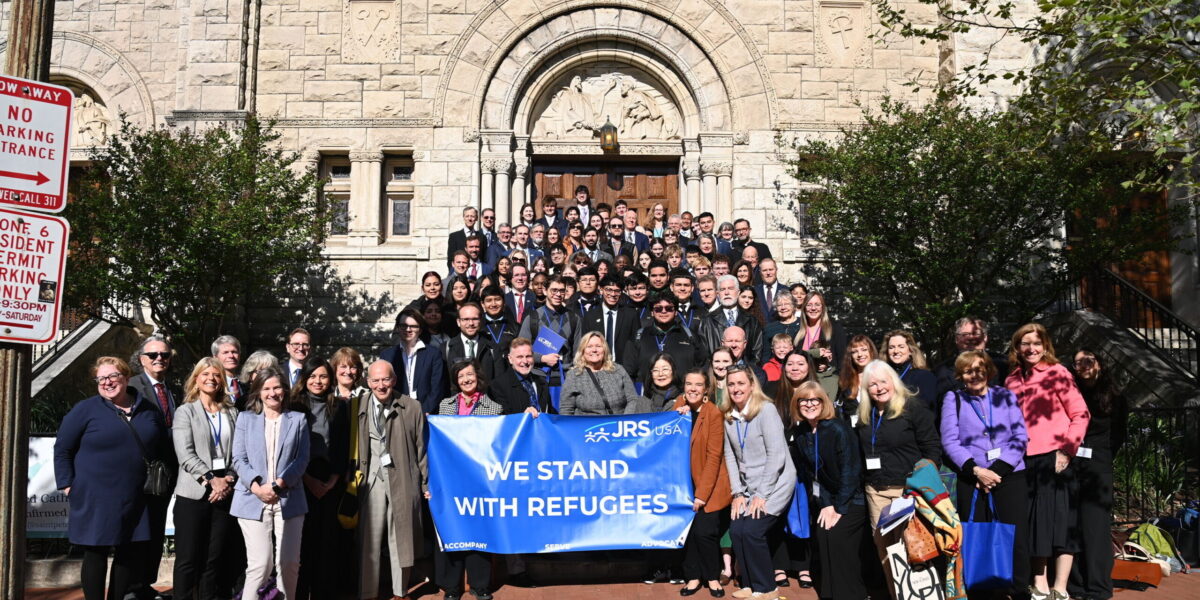
On Tuesday, April 21, more than 500 advocates across the country met with Members of Congress and their staff, urging them to stand with refugees and migrants both here in the U.S. and around the world.
 In more than 150 meetings, from laptops on kitchen counters and classrooms, to gatherings in Senate hallways and congressional offices, participants came prepared with four key asks: fund International Humanitarian Assistance (IHA) at $8.7 billion and U.S. Emergency Refugee and Migration Assistance (ERMA) at $100 million in FY27; restore the Sensitive Locations Policy to limit immigration enforcement near churches, hospitals, schools, and courts; protect religious liberty in immigration detention centers; and update the registry program.
“Advocacy Day was an opportunity to heed the call to family, community, and participation that we hear so clearly in Catholic social teaching,” said Sr. Bethany Welch, a member of the U.S. Federation of the Sisters of St. Joseph. “We prayed before our first meeting that our words would be clear and our voices courageous. I believe that came through,” she said, recalling one conversation that took place in a crowded hallway outside a committee hearing.
Advocacy Day 2026 came at a particularly important time. Following Pope Leo’s affirmation of the rights of migrants and his calls for peace in Iran, Gaza, and elsewhere, advocates gathered this year with a renewed sense of purpose.
With 46 Jesuit apostolates participating, the day was grounded in Ignatian values and a shared commitment among Catholics to advance policies that uphold the inherent dignity of migrants, refugees, and asylum seekers.
“Across four meetings, we spoke with two House members and two staffers who received us with respect for the JRS mission and the Jesuit tradition. This was a testament to the community formed around this charism,” said Sr. Bethany.
The meetings reflected broad bipartisan engagement, with advocates connecting directly with lawmakers across party lines. Senators Bill Hagerty (R-TN), Chris Van Hollen Jr. (D-MD), Dave McCormick (R-PA), Jeff Merkley (D-OR), Marsha Blackburn (R-TN), Susan Collins (R-ME), and Tammy Duckworth (D-IL) were among those who met with constituents in person.
Cristina Donoso, a Program Manager at JRS/USA, and her group met with Representative Delia Ramirez who remarked that the JRS group’s specific asks were some of the most strategic that she had encountered in a constituent meeting.

Olivia Ziccardi of John Carroll University traveled from Cleveland, Ohio, to “voice some of my lived experiences and shared perspectives with migrants, refugees, and asylum seekers, and to push for better policies.”
Said Andy, a student from Don Bosco Cristo Rey High School in Maryland: “Migrants are the backbone of our country,” said Andy. “They are part of our communities, churches, and schools. Without migrants, our country would not be the same.”
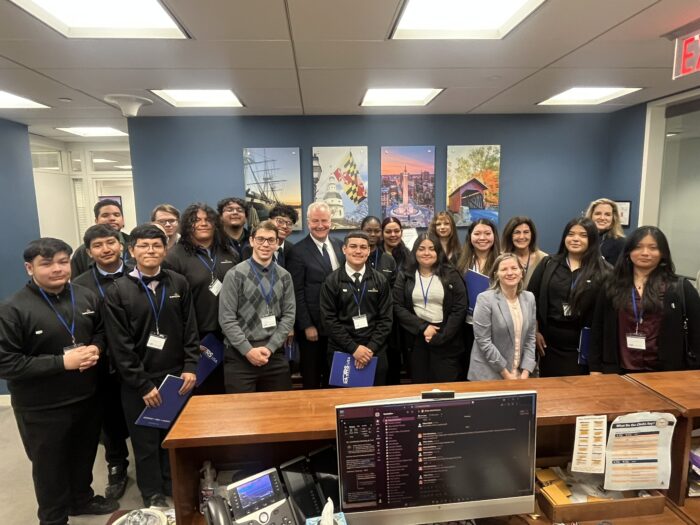 “We had so many meaningful opportunities [with our congressional offices],” chimed in his classmate, Angel. “Being able to share our views with our senators is so important.”
For Carolyn Wright, Assistant Director of Campus Ministry for Social Justice at Fordham Preparatory School in The Bronx, New York, the day underscored both the urgent need for change and a sense of possibility. Leading a group of New York constituents on Capitol Hill, she reflected: “My two major takeaways…are that we need to [press] representatives and federal agencies for humane action and truthful information, and young people are essential participants in this movement for peace and justice. JRS introduced advocacy in a way that empowered my students to step into their roles in a tangible and impactful way. We moved beyond awareness into real-time action.”
Advocacy Day made clear that sustained, collective pressure matters. Across dozens of meetings, advocates brought their personal experiences with humanitarian assistance overseas and the realities of migrants and refugees directly into policy conversations, challenging leaders to respond with greater humanity, accountability, and care.
Explore more