Thousands Displaced in Lebanon as Violence Escalates
05 March 2026
Escalating violence in Lebanon has displaced thousands of families. Jesuit Refugee Service is responding with emergency assistance, shelter, and psychosocial support for communities forced to flee.
Violence in Lebanon has forced thousands of people to flee their homes in recent days, creating urgent humanitarian needs across the country.
Airstrikes and cross-border attacks linked to the ongoing conflict between Israel and Hezbollah have displaced tens of thousands of civilians, with families fleeing southern communities and parts of Beirut in search of safety. Many are now sheltering in schools, churches, and public buildings as the violence intensifies.
For many families, this is not the first time they have been forced to flee.
Lebanon is already home to one of the highest concentrations of refugees in the world, hosting around 1.5 million Syrian refugees and thousands of Palestinian refugees alongside vulnerable Lebanese communities. The renewed violence is placing additional strain on communities that have already endured years of economic crisis, political instability, and regional conflict.
A Growing Humanitarian Crisis
Recent fighting has forced tens of thousands of people to abandon their homes—often with little more than the clothes they were wearing.
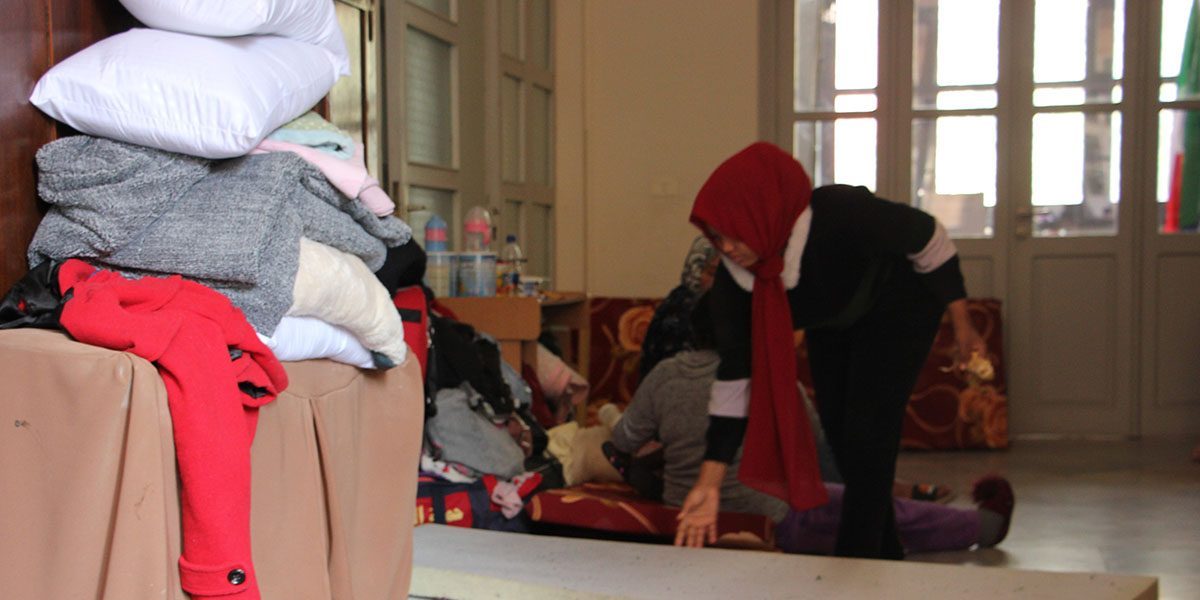
Shelters are quickly filling as families arrive seeking safety. Some are staying with relatives, while others are sleeping in cars or temporary collective shelters as humanitarian organizations work to provide basic assistance.
Children are among the most vulnerable.
Humanitarian organizations warn that displacement disrupts schooling, separates families, and increases risks for women and children who have lost stable housing and community support.
For many people, the uncertainty is overwhelming. Families who once hoped the worst of the conflict had passed are again living with the fear of sudden displacement.
JRS Responds to Support Displaced Families
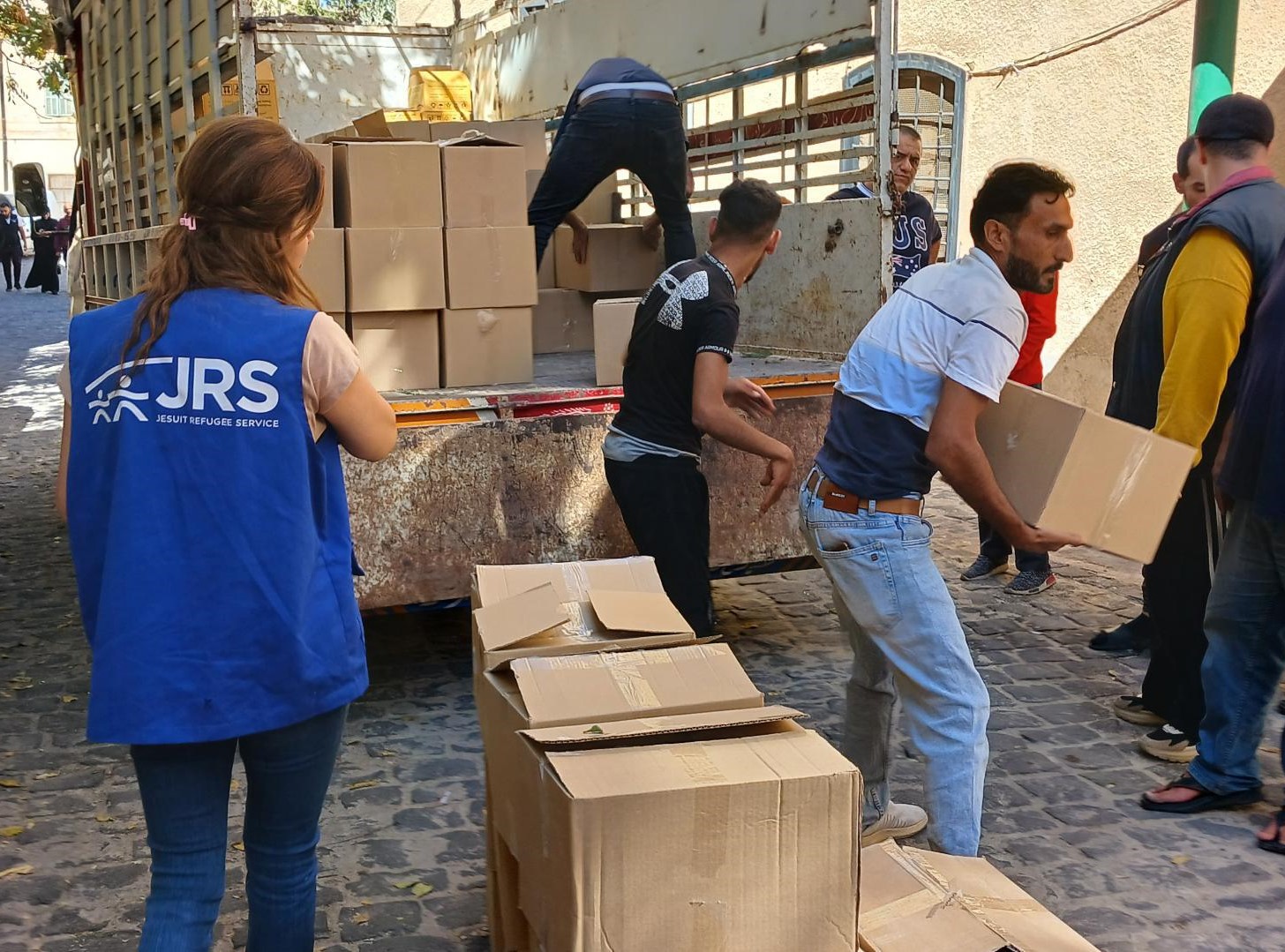
Jesuit Refugee Service (JRS) is working alongside local partners to support those affected by the crisis.
JRS teams and Church partners are helping displaced people access:
- Emergency shelter and safe spaces
- Food and essential household supplies
- Mental health and psychosocial support
- Community accompaniment and pastoral care
Church-run centers and Jesuit institutions in Lebanon are also opening their doors to migrants and displaced families who have nowhere else to go.
These efforts reflect the mission that guides JRS worldwide: to accompany, serve, and advocate for refugees and forcibly displaced people.
Why This Matters for the United States
Conflicts like the one unfolding in Lebanon often feel distant to Americans, but the consequences reach far beyond national borders.
The Middle East has experienced repeated cycles of displacement over the past decade, contributing to the largest global refugee crisis in modern history. Millions of people remain displaced across the region, and humanitarian organizations rely heavily on international support to sustain emergency response and long-term recovery.
The United States has historically played a critical role in humanitarian assistance worldwide, supporting programs that provide food, shelter, education, and mental health services to displaced families.
For organizations like JRS, this support helps ensure that communities experiencing conflict are not forgotten.
Standing with People Forced to Flee
As violence continues, the needs of displaced families in Lebanon are expected to grow.
Humanitarian organizations are urging the international community to support relief efforts and to prioritize the protection of civilians caught in the conflict.
For families who have lost their homes, the path forward is uncertain. Yet amid displacement and fear, local communities, faith organizations, and humanitarian workers continue to provide care, shelter, and hope.
Sources
Explore more