The Frontlines of Humanitarian Aid Cuts: South Sudan, Kenya, and Lebanon One Year Later
19 February 2026|Chloe Gunther
One year after sweeping U.S. foreign aid cuts destabilized the global humanitarian system, many of JRS’ country offices are operating on a much smaller scale than they once did. The reductions came quickly—and earlier than anticipated—though the number of displaced people continues to grow.
“Given the political landscape, we knew this funding change would come but we did not anticipate it would happen so soon or quickly,” said Geoffrey Shikuku, director of JRS Kenya.
Across South Sudan, Kenya, and Lebanon, JRS teams have had to make difficult decisions about which programs could be sustained with substantially reduced staff and resources. Each office asked the same question: How do you uphold dignity as means shrink?
South Sudan
This time last year, the environment in South Sudan was already fragile due to its own political instability and conflict and a worsening humanitarian crisis driving displacement in Sudan.
JRS is present throughout the Upper Nile Region and Western Equatoria State (WES) but has been forced to scale back.
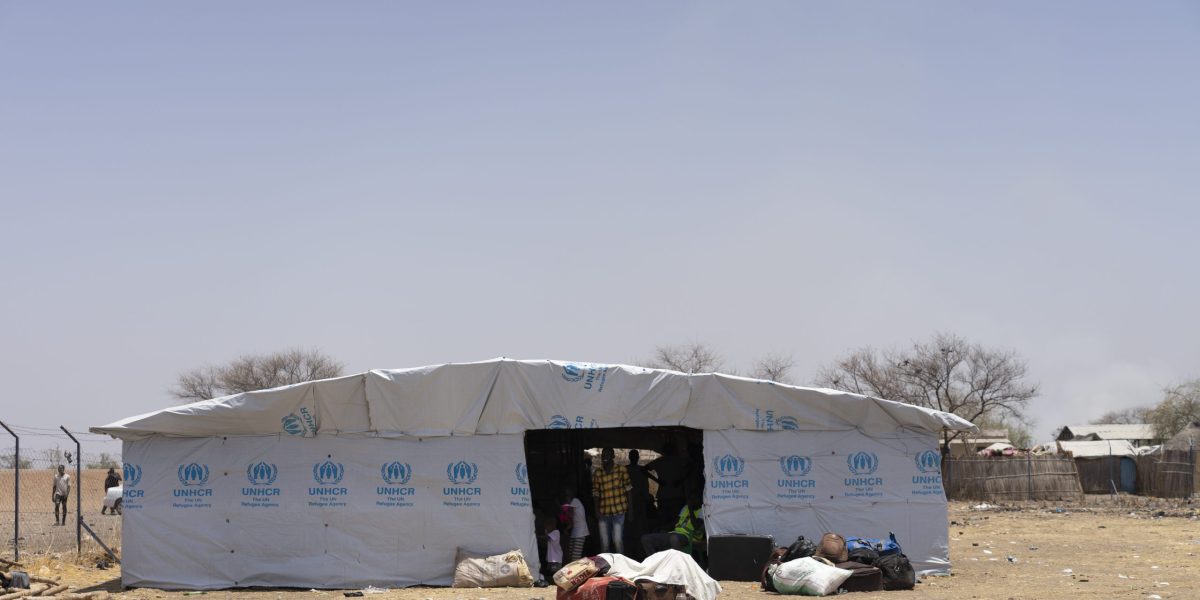
Renk, located in the Upper Nile Region, is on the front lines of the influx of refugees and returnees to South Sudan. Renk sits along the border with Sudan, and the JRS team reports that last month, up to 1,000 Sudanese refugees fled into Renk each day.While this is a reduction in numbers since 2025, when at least 5,000 were estimated to be fleeing into Renk each day, the need for support is running up against dramatically decreased funding.
Western Equatoria State (WES) has experienced sustained armed conflict since the outbreak of South Sudan’s civil war in 2013, with clashes between government and opposition forces as well as inter-communal violence. The conflict has displaced some137,000 people, resulting in loss of lives and property, and disrupted livelihoods and access to basic services. The recurring violence has also led to a growing number of unaccompanied and separated children.
Despite these challenges, WES continues to host more than 21,000 refugees, including new arrivals from the Central African Republic (CAR) and Sudan, as well as South Sudanese returnees from neighboring countries.
JRS has been present in WES since the start of the civil war, delivering lifesaving interventions. However, due to significant funding gaps, exacerbated by the withdrawal of U.S. government funding, JRS and many other humanitarian actors have scaled down operations.
Maban is a large county in the Upper Nile Region of South Sudan where thousands of refugees eventually settle after arriving through Renk. Due to funding cuts, interventions that once served Doro, Gendrassa, Batil, and Kaya refugee camps there now only reach Doro and Gendrassa.
For Eunice Francis Nasia, a 25-year-old mother of two and JRS teacher in WES, even modest interventions carried weight. After finishing secondary school, she began teaching, earning the equivalent of $1.50 per month through parent contributions. These small, irregular payments were not enough to support her family’s daily needs.
When JRS assessed teachers for the training program, Eunice was selected and she changed her life.
“Today, you see me look like a teacher,” she said proudly.
Recognizing the importance of this training program—the only one of its kind in the Upper Nile region—JRS adapted when funding stopped. What had previously been a boarding program has now been decentralized into the refugee camps, eliminatingbarriers to access. The program is now led by JRS teams who travel to refugee communities to provide trainings and allow the teams to expand their reach.
Kenya
Like in South Sudan, the effects of reduced funding are visible throughout Kenya. Many people in the community have resorted to negative coping mechanisms including early marriage, teenage pregnancy, crime, and families returning to unsafe home countries. Resources for medical care are all but depleted and malnutrition is rising.
JRS Kenya has reduced staff from approximately 475 teachers and support staff to less than 150. Roles were consolidated; work once handled by three people is now handled by one. Short-term contracts have replaced long-term ones. Though morale initially suffered, Geoffrey said the team has settled into the new reality.
Rather than attempting to maintain breadth, the office narrowed its focus to a core strength: gender-responsive education with integrated mental health services. The team partnered with other organizations to divide responsibilities based on comparative strengths and leaned more heavily on refugee-led groups and community leaders to conduct needs assessments and target programming.
JRS Kenya’s gender-responsive education approach addresses the specific needs, roles, and barriers faced by girls and boys so they can equally benefit from education—something that often does not happen in refugee communities.
Even amid difficulty and strain, Geoffrey and his team have found moments of encouragement. Recently, students who benefited from JRS scholarship programs visited the office with cake and flowers after performing well in their national exams. For staff, it was a reminder that even in a constrained system, the work bears fruit.
Lebanon
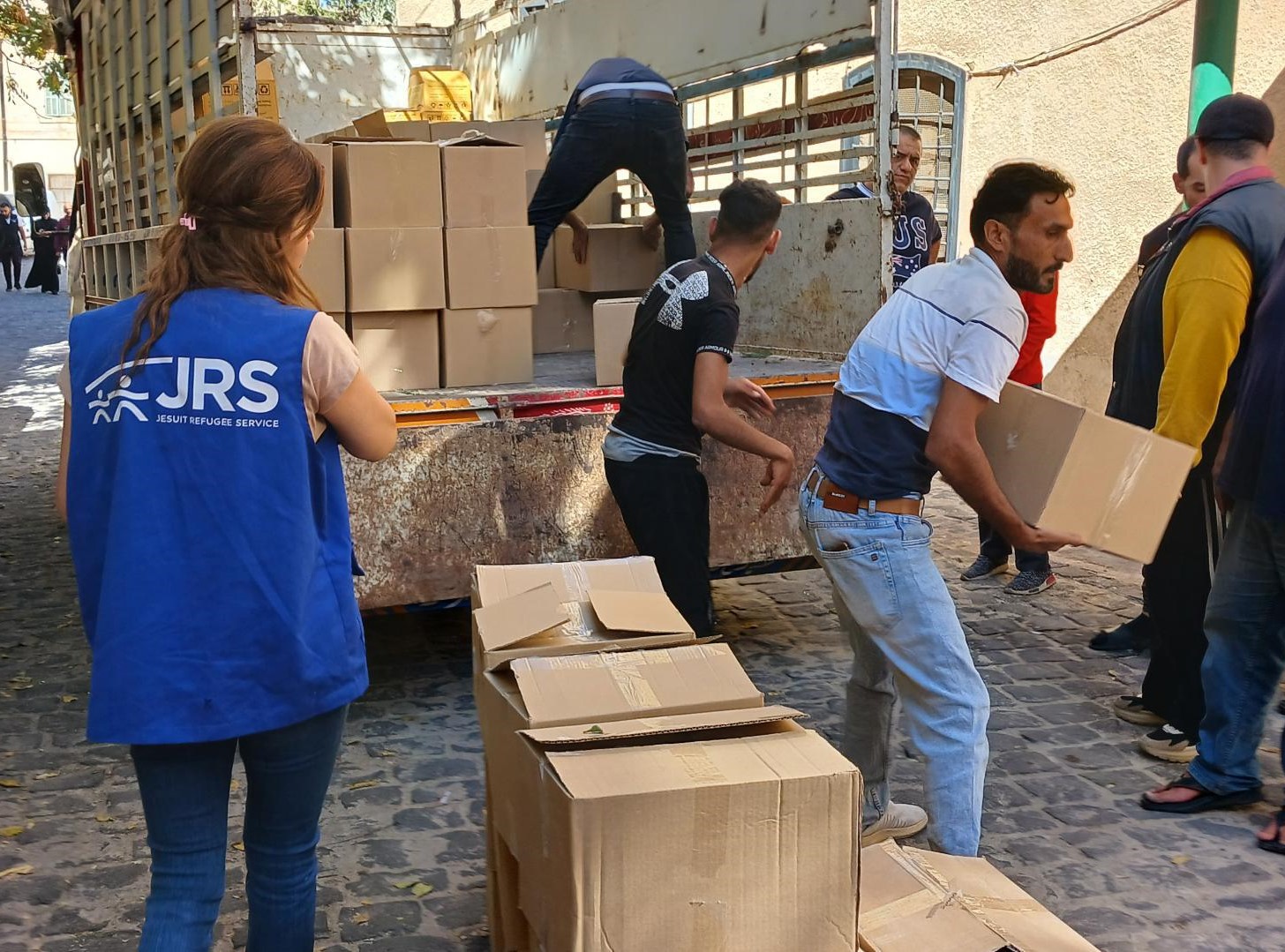
Adaptation to changed circumstances unfolded in the shadow of war in Lebanon. On Sept. 23, 2024, airstrikes hit parts of the country. JRS suspended programs and rapidly shifted to emergency response. That same evening, a migrant woman called St. Joseph Parish, where JRS Regional Director Fr. Dan Corrou is pastor, seeking shelter for herself and her five children. The church opened its doors. Word spread, and families followed.
As violence escalated, the team pivoted. While many Lebanese families left government shelters after a ceasefire, many migrant workers and refugees, excluded from broader support systems, had nowhere to go. The church continued hosting families through mid-February.
Major cuts to U.S. foreign aid complicated the picture. “It was really a one-two punch,” said Michael Petro, S.J., who helps lead JRS’ work in Lebanon.
Even so, the team proceeded with plans for a new JRS center closer to migrant neighborhoods, offering case management, mental health and psychosocial support, legal assistance, and mediation with employers. Eighteen migrant- and refugee-led groups now gather there, including the Sudanese Women’s Association, led by Martha, a South Sudanese refugee who coordinated support for families at the shelter and now serves as a bridge between JRS and her community.
__________
Across these three contexts, the pattern is consistent: less funding, more displacement and persistent uncertainty. Programs have gotten smaller and more targeted. Staff are stretched. Refugee and migrant community leadership is more central than ever.
Still, JRS teams are walking with refugees.
Explore more