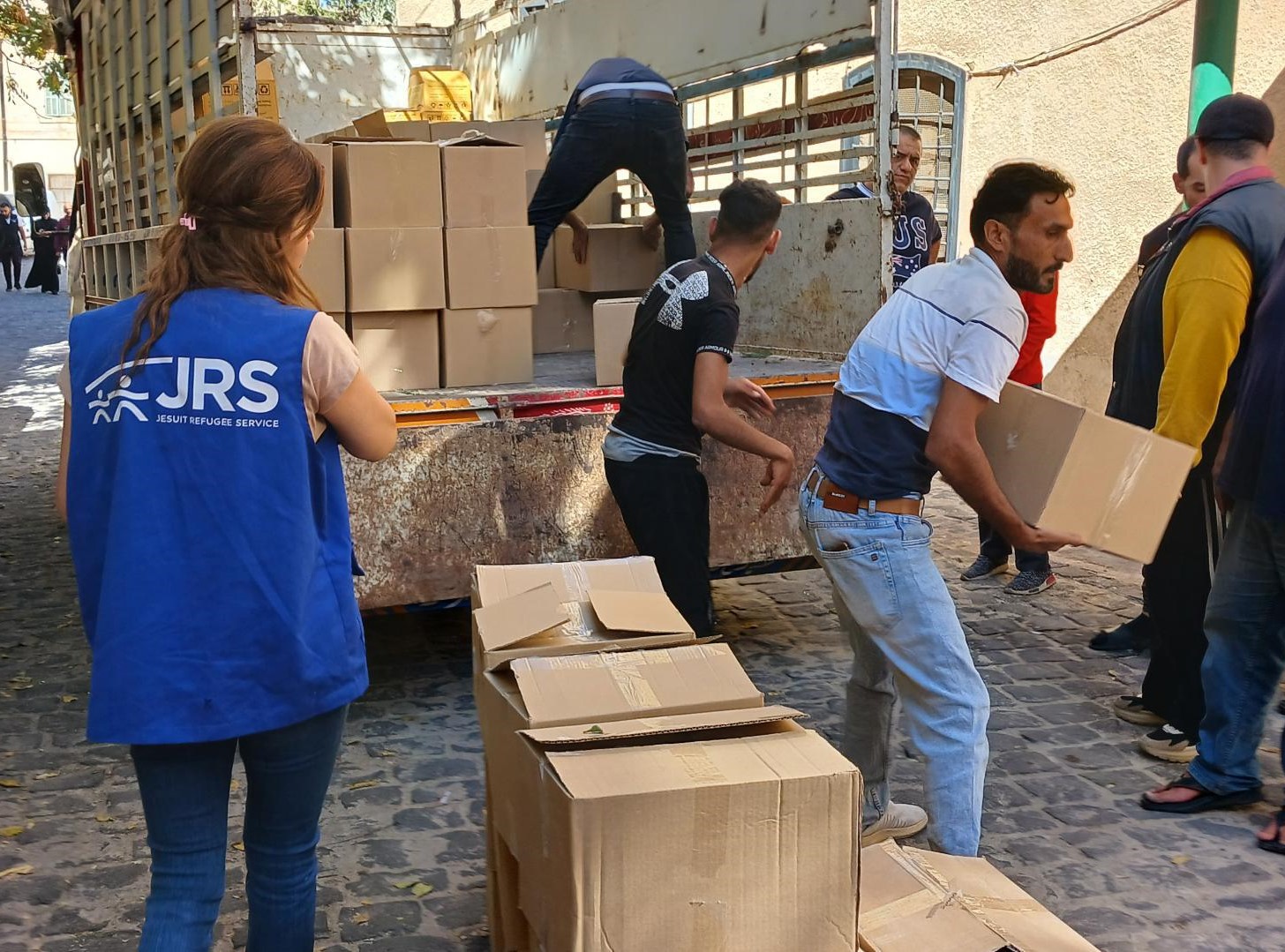
Livelihoods Programs for Refugees

Jesuit Refugee Service (JRS) livelihoods programs support refugees and other forcibly displaced people in building the skills, resources, and opportunities needed to sustain themselves and their families. Through vocational training, entrepreneurship support, language instruction, and employment preparation, JRS helps displaced communities develop pathways toward long-term stability and economic independence.
Forced displacement often leaves people without income, professional networks, or opportunities to work legally in host countries. Livelihoods initiatives help restore dignity and agency by enabling refugees to develop practical skills, pursue employment, and rebuild their futures within their communities.
JRS Livelihoods Programs: Quick Facts
- Program Focus: Economic empowerment and self-reliance for refugees
- Where Programs Operate: Refugee camps, urban displacement settings, and host communities worldwide
- Core Activities: Vocational training, business development, language instruction, and employment preparation
- Goal: Support refugees in developing sustainable livelihoods and long-term stability
Why Livelihoods Matter for Refugees
For many refugees, displacement lasts years or even decades. During these prolonged periods, individuals and families must find ways to support themselves despite limited access to employment, legal protections, and financial resources.
Livelihoods programs help refugees regain independence and rebuild their lives by providing skills training, professional development, and support for entrepreneurship. These programs empower forcibly displaced people to contribute to local economies while supporting their families and communities.
Global Refugee Livelihood Challenges
Refugees often face significant barriers when trying to secure employment or start businesses in host communities. These challenges may include:
- Restrictions on legal employment in host countries
- Limited recognition of professional qualifications
- Language barriers and lack of local job networks
- Limited access to financial services or startup capital
Livelihood initiatives help address these challenges by providing practical skills training, mentorship, and access to resources that enable refugees to pursue economic opportunities.
What JRS Livelihoods Programs Provide
JRS livelihoods initiatives focus on equipping refugees with the tools and resources needed to develop sustainable income sources. Programs respond to local labor markets and the specific needs of displaced communities.
Vocational Training
JRS provides training in a variety of practical skills including trades, digital literacy, technical fields, and service industries. These programs help refugees develop marketable skills that increase employment opportunities.
Entrepreneurship and Business Development
Some programs help refugees start or expand small businesses through entrepreneurship training, mentorship, and access to grants or micro-loans.
Language and Employment Preparation
Language classes, résumé development, and job readiness workshops help refugees navigate local job markets and pursue employment opportunities.
Agricultural Livelihoods
In some regions, JRS provides seeds, tools, and agricultural training to help refugees cultivate food and generate income through farming initiatives.
How Livelihoods Programs Strengthen Communities
Livelihood initiatives benefit not only individual refugees but entire communities. When forcibly displaced people are provided with adequate resources to work and start businesses, they contribute to local economies and strengthen social cohesion.
Through these programs, JRS promotes dignity, resilience, and sustainable development for refugees and host communities alike.
Related JRS Programs
Livelihood programs often work alongside other JRS initiatives that support the wellbeing and resilience of displaced communities.
- Education Programs – Education and skills training help refugees develop knowledge and opportunities for long-term success.
- Mental Health and Psychosocial Support – Counseling and community support help refugees process potential trauma while pursuing education and employment.
- Education and Livelihoods – Integrated programs connect learning with economic opportunity.
Where JRS Livelihood Programs Operate
JRS livelihoods initiatives operate across multiple global regions where refugees and other forciblly displaced communities are rebuilding their lives.
- Middle East and North Africa (MENA)
- Africa
- Asia Pacific
- Latin America and the Caribbean (LAC)
- Europe
Common Questions About Refugee Livelihoods
Why are livelihoods programs important for refugees?
Livelihood programs help refugees build upon their skills and provide the resources needed to earn income, support their families, and rebuild their lives after displacement.
What types of jobs do refugees train for?
Training programs vary by region but may include trades, technology skills, entrepreneurship, agriculture, hospitality, and service industries.
Frequently Asked Questions
What are livelihoods programs for refugees?
Livelihood programs help refugees build economic independence through vocational training, entrepreneurship support, employment preparation, and access to resources.
Where does JRS provide livelihoods programs?
JRS livelihoods initiatives operate in refugee camps and urban communities across multiple regions worldwide.
How do livelihoods programs support refugee self-reliance?
By providing training, business development support, and employment preparation, livelihoods programs help refugees earn income and support their families.
Sources
Program Stories
The Frontlines of Humanitarian Aid Cuts: South Sudan, Kenya, and Lebanon One Year Later
19 February 2026
JRS INSIDER | Where a Church Opened Its Doors, Community Took Root
06 February 2026

Maryam’s journey of hope
06 November 2025


Jesuit Refugee Service Global Program Highlights
21 February 2025