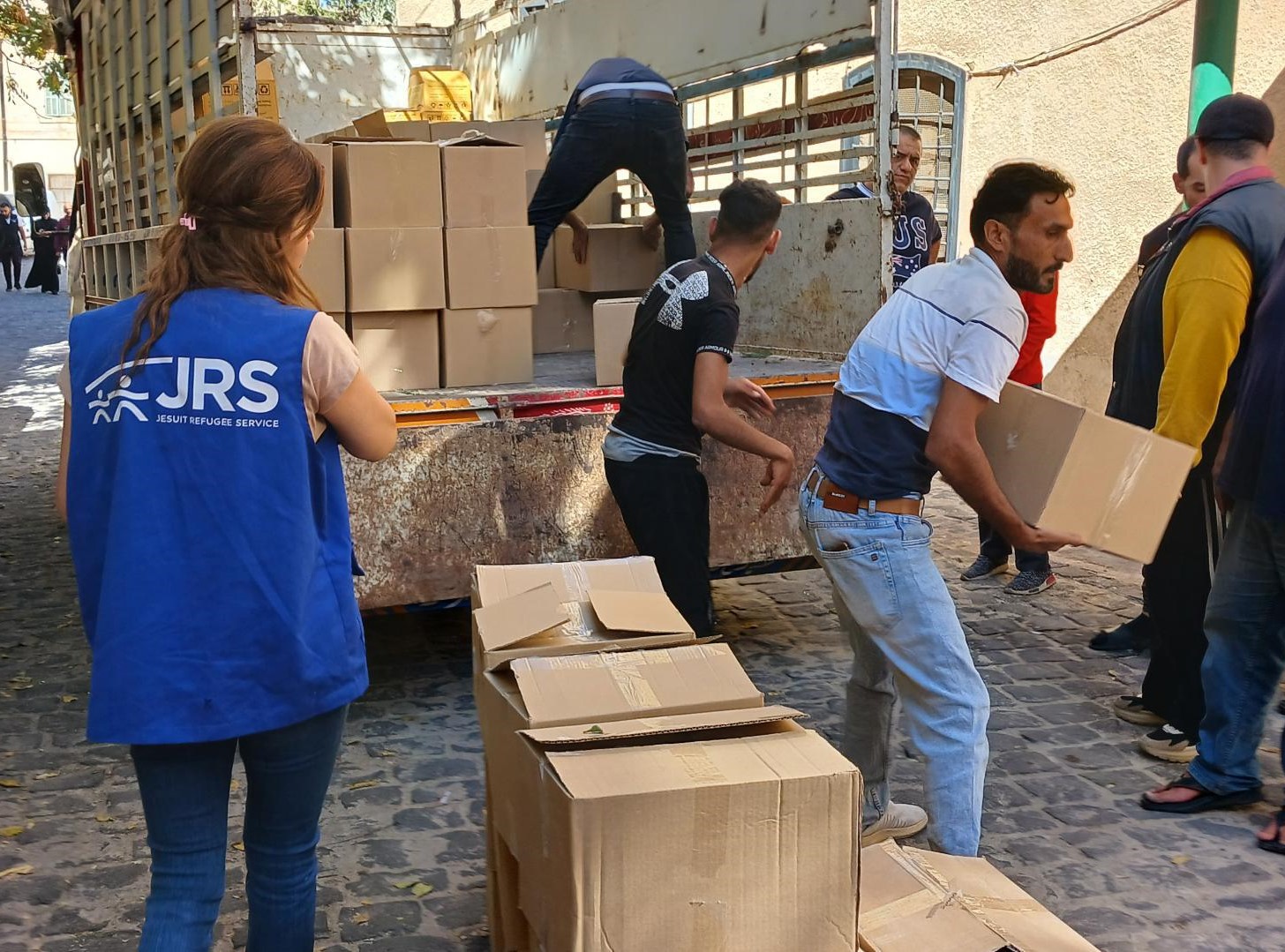
JRS/USA and the Archdiocese of Washington Foster a Profound and Prayerful Opposition to Inhumane Immigration Policies
03 October 2025|Chloe Gunther

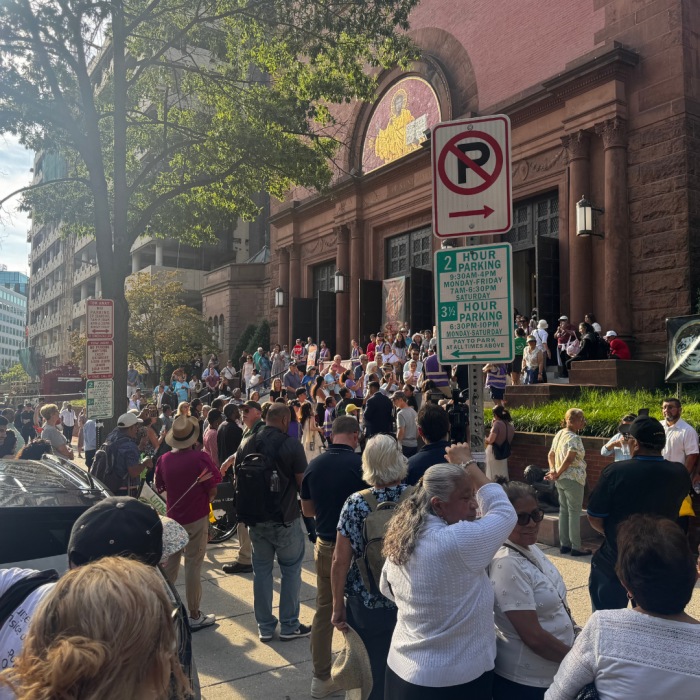
On Sunday, September 28th, hundreds of DC-area Catholics and migrant advocates gathered to mark the 111th World Day of Migrants & Refugees and this year’s Jubilee of Migrants, demonstrating how our faith calls us to welcome the stranger with compassion.
The Reflection Procession began at the Shrine of the Sacred Heart in D.C.’s Columbia Heights neighborhood and proceeded peacefully along 16th Street until turning to end at the Cathedral of St. Matthew the Apostle. The group sang songs, listened to readings from scripture and Church leaders, and paused to listen to the stories of displaced people.
Dr. Lilliam Oliva Collmann joined the procession “to be in solidarity with the migrant community.” For her, this is personal. In 1962, at age 10, she and her 12-year-old sister fled Cuba for Florida. Their mother reunited with them a few months later, and a year after that, their father was able to escape as well. The family moved to Yonkers, N.Y., where a Presbyterian church welcomed them.
 Dr. Collmann has spent her life and career extending welcome to others who find themselves in similar shoes through her work teaching students in migrant and refugee communities, working with the Spanish Catholic Center, and earning a doctorate in Cuban literature with a focus on the Cuban Revolution and its lasting impact on Cuban communities.
“I know what this uncertainty is like, the whole process of integrating yourself and learning a new culture…We were strangers and the churches [both Catholic and Presbyterian] welcomed us,” Dr. Collmann said.
“The whole procession was incredibly moving, especially the stories of migrants we heard along the way,” she continued. “Their feelings of despair turned to hope when these ‘angels’ would show up…That’s so important,” she added, describing how many migrants described feeling about the volunteers and community members who helped them find their way in a new country and community.
One such story was from Julien, an asylum seeker from Cameroon. Fr. Robenson Siquitte, S.J., originally from Haiti, read Julien’s testimony. A particularly moving passage left some in the crowd in tears:
“When I finally arrived in the United States, I thought the hardest part was behind me. But migration does not end at the border. It continues in the quiet loneliness of being far from home. I have not seen or hugged my mother and my brothers in the longest time. Sometimes, when the weight is too much, I wrap my arms around myself and imagine my mother’s embrace. She tells me she still loves me, and I know, across oceans, she feels it.”
Members of other faith organizations, including other Christian denominations and Buddhist communities, joined the procession, united by shared belief in fundamental human dignity and showing hospitality to migrants and refugees.
“I am here today to be in solidarity with my Catholic brothers and sisters to support the importance and the unequivocal right to human dignity that we all have regardless of our status,” said one participant, who joined the Reflection Procession with his Episcopal Church, where he advises the church on policy related to migrants and refugees.
The procession culminated with a Mass celebrated by Cardinal Robert McElroy, joined by about 30 concelebrants from Catholic parishes and religious orders from around the Archdiocese. Cardinal McElroy offered a homily that brought the packed Cathedral of St. Matthew the Apostle to their feet in a standing ovation.
He did not hold back in his description of what has been happening to migrants in the U.S.
“We are witnessing a comprehensive governmental assault designed to produce fear and terror among millions of men and women who have through their presence in our nation been nurturing precisely the religious, cultural, communitarian and familial bonds that are most frayed and most valuable at this moment in our country’s history,” Cardinal McElroy said.
The Reflection Procession was a meaningful afternoon and but one piece of a much larger challenge and effort. See how you can stand up for forcibly displaced people. Explore our Migrant Accompaniment Network above, host a vigil in your community, become a member of our Migrant Accompaniment Network,and/or launch an Action Team in your parish, school, or community.
Not able to join us on September 28th or looking to re-read the moving reflections? You can read each speaker’s words here.
Explore more